
Meat Temperature Chart
The complete meat temperature chart for beef, pork, poultry, lamb, ground meat, and fish — with safe minimum internal temperatures straight from the USDA.
How to Use This Meat Temperature Chart
This meat temperature chart lists the USDA’s safe minimum internal temperatures — the point at which a food thermometer confirms meat is safe to eat, not just “done” by appearance. Color, firmness, and cooking time are not reliable ways to check doneness; a food thermometer inserted into the thickest part of the meat, away from bone, fat, or gristle, is the only accurate method.
Different meat categories have different safe minimums because of how bacteria behave in each. Whole cuts of beef, pork, lamb, and veal only carry bacteria on the surface, which high heat kills quickly, so a lower internal temperature is safe. Ground meats mix any surface bacteria throughout the entire product during grinding, which is why ground beef, pork, lamb, and veal require a higher temperature than whole cuts. Poultry requires the highest standard temperature of all major meat categories due to its higher risk of bacterial contamination.
Meat Temperature Chart by Category
| Meat Category | Safe Minimum Temp | Rest Time |
|---|---|---|
| Beef, Pork, Veal & Lamb (steaks, roasts, chops) | 145°F (63°C) | 3 minutes |
| Ground Beef, Pork, Lamb & Veal | 160°F (71°C) | None required |
| All Poultry (chicken, turkey, duck — whole, parts, ground) | 165°F (74°C) | None required |
| Fish & Shellfish | 145°F (63°C) | None required |
The 3-minute rest for whole-muscle beef, pork, lamb, and veal isn’t optional — it’s part of the safety standard, not just a resting-for-juiciness recommendation. During those 3 minutes, the temperature stays constant or continues to rise slightly, which finishes destroying any remaining surface bacteria. Ground meats and poultry don’t require a rest period because they’re cooked to a higher temperature that already accounts for this margin.
Why Ground Meat Needs a Higher Temperature Than Whole Cuts
It’s a common point of confusion: why does ground beef need to hit 160°F when a beef steak is safe at 145°F? The answer is entirely about where bacteria live. On a whole cut of meat, bacteria live only on the exterior surface — searing or otherwise heating that surface to a safe temperature is enough, even if the interior stays pink. Grinding meat mechanically mixes that surface bacteria all the way through the product, so the entire mass needs to reach a higher, bacteria-killing temperature since there’s no longer a “safe pink interior.”
Steak and Beef Internal Temperature by Doneness
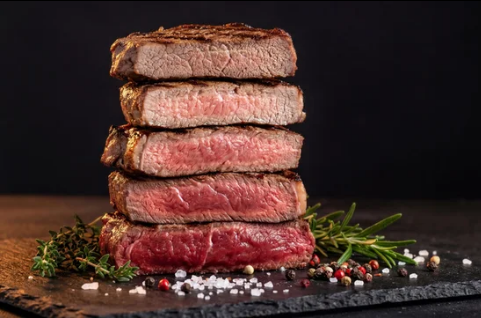
The 145°F USDA minimum for whole beef cuts corresponds to roughly medium doneness. Many people prefer beef steaks cooked to a lower personal-preference temperature, such as medium-rare — the USDA acknowledges this as a personal choice, but notes that only the 145°F minimum (with a 3-minute rest) is verified safe for whole-muscle beef, pork, lamb, and veal. If you prefer a lower doneness, that’s a personal risk tradeoff to make with an understanding of what the safe minimum actually is.
Frequently Asked Questions
All poultry, including chicken, turkey, and duck — whether whole, in parts, or ground — must reach a safe minimum internal temperature of 165°F. Check the thickest part of the breast and the innermost part of the thigh and wing.
Whole cuts of beef — steaks, roasts, and chops — should reach a minimum internal temperature of 145°F, followed by a 3-minute rest before carving or serving. Ground beef requires a higher minimum of 160°F, since grinding distributes any surface bacteria throughout the meat.
Bacteria on whole cuts of meat live only on the surface, so heating the exterior to a safe temperature is enough even if the interior is less done. Grinding mixes that surface bacteria throughout the entire product, so ground meat needs to reach a higher internal temperature — 160°F for ground beef, pork, lamb, and veal — to be safe throughout.
No. The USDA specifically recommends against using color, firmness, or cooking time as indicators of doneness. A food thermometer inserted into the thickest part of the meat, away from bone, fat, or gristle, is the only reliable way to confirm meat has reached a safe internal temperature.
Information provided by USDA Food Safety and Inspection Service.